In Search of Mycotopia: Citizen Science, Fungi Fanatics, and the Untapped Potential of Mushrooms by Doug Bierend
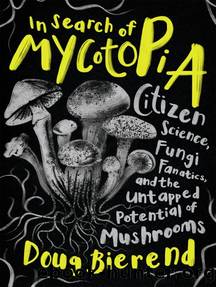
Author:Doug Bierend [Bierend, Doug]
Language: eng
Format: epub
ISBN: 9781603589802
Google: qs4hEAAAQBAJ
Published: 2021-03-09T18:30:00+00:00
CHAPTER EIGHT
Ferment Yourself
The landscape around Short Mountain, curiously the tallest point in middle Tennessee, is a tangle of creek-cut ravines crowded by tulip poplars and thick oak-hickory forest. The local dogs have a funny habit of pacing alongside the passing cars on the serpentine dirt roads and napping in the shaded embankments. My cell phone reception vanished along with the pavement, well before I crossed the leaf-littered gulley and ascended a steep, rutted road that led to the home of Sandor Katz. Near the top of the hill, a hand-painted sign strung to a tree welcomed me to Walnut Ridge.
I had come to the deep reaches of Cannon County to attend a semiannual five-day workshop held at the off-grid homestead of the celebrated fermentation revivalist. Parking next to a half courtâsized solar panel, I approached the two-hundred-year-old, handsomely refurbished cabin. It was still morning, and quiet save for the murmur of Katzâs distinctive voice drifting from behind a side door, and the complaint of a small cat that stalked out from the trees in hopes of getting inside. Creaking open the door, I stepped into the midst of a crowd clustered around a large countertop at the center of a green-walled wizardâs lair of a kitchen. âYou must be Doug. Welcome, welcome,â Katz said, easing my slight embarrassment over the interruption. I tucked up against the stone backside of a huge fireplace as he resumed his demonstration.
Katz stood at the head of the gaggle of more than a dozen aspirant microbe-charmers, eager to plumb the seemingly infinite culinary possibilities of fermentation. Sagacious and scruffy, with a salt-and-pepper beard and a perforated old T-shirt that read PLEASE PASS THE BACTERIA, he massaged a heaping teaspoon of koji starter into barley, gingerly dumping the mix into a cedar tray box and furrowing the pile with his fingers, explaining that he was increasing the surface area to radiate heat and avoid killing the fungus while it incubated.
Fermentation might be most easily associated with bacteria, but fungi are no less fundamental to fermentative practices. Koji is a prime example. The Aspergillus oryzae mold is fundamental to miso, soy sauce, amazake, sake, and other traditional ferments; in Japan it is the ânational mold,â and its use in China extends back some nine thousand years.¹ But koji has undergone a renaissance in recent years, as chefs and gastronomists and home fermenters alike discover its many applications for bringing umami out of all manner of ingredients. The malleability, reliability, and relatively easy application of koji have made it an intense subject of interest for those looking to unlock new flavors through fermentation, such as for meat and vegetable charcuterie.
âKojiâs all about the enzymes,â said Katz, âbecause kojiâs not really a food, people donât really eat koji, although itâs delicious, and thereâs nothing wrong with eating it, but generally, itâs a vehicle.â
Setting the barley into his incubatorâan old refrigerator with a tricky door, stripped of its wiring and retrofitted with an incandescent light bulbâKatz retrieved a small crock of another koji product, called doubanjiang.
Download
This site does not store any files on its server. We only index and link to content provided by other sites. Please contact the content providers to delete copyright contents if any and email us, we'll remove relevant links or contents immediately.
Sapiens: A Brief History of Humankind by Yuval Noah Harari(14389)
The Tidewater Tales by John Barth(12659)
Mastermind: How to Think Like Sherlock Holmes by Maria Konnikova(7347)
The Thirst by Nesbo Jo(6944)
Do No Harm Stories of Life, Death and Brain Surgery by Henry Marsh(6941)
Why We Sleep: Unlocking the Power of Sleep and Dreams by Matthew Walker(6725)
Life 3.0: Being Human in the Age of Artificial Intelligence by Tegmark Max(5558)
Sapiens by Yuval Noah Harari(5372)
The Body: A Guide for Occupants by Bill Bryson(5097)
The Longevity Diet by Valter Longo(5064)
The Rules Do Not Apply by Ariel Levy(4969)
The Immortal Life of Henrietta Lacks by Rebecca Skloot(4588)
Animal Frequency by Melissa Alvarez(4473)
Why We Sleep by Matthew Walker(4447)
The Hacking of the American Mind by Robert H. Lustig(4383)
Yoga Anatomy by Kaminoff Leslie(4363)
All Creatures Great and Small by James Herriot(4322)
Double Down (Diary of a Wimpy Kid Book 11) by Jeff Kinney(4272)
Embedded Programming with Modern C++ Cookbook by Igor Viarheichyk(4179)
